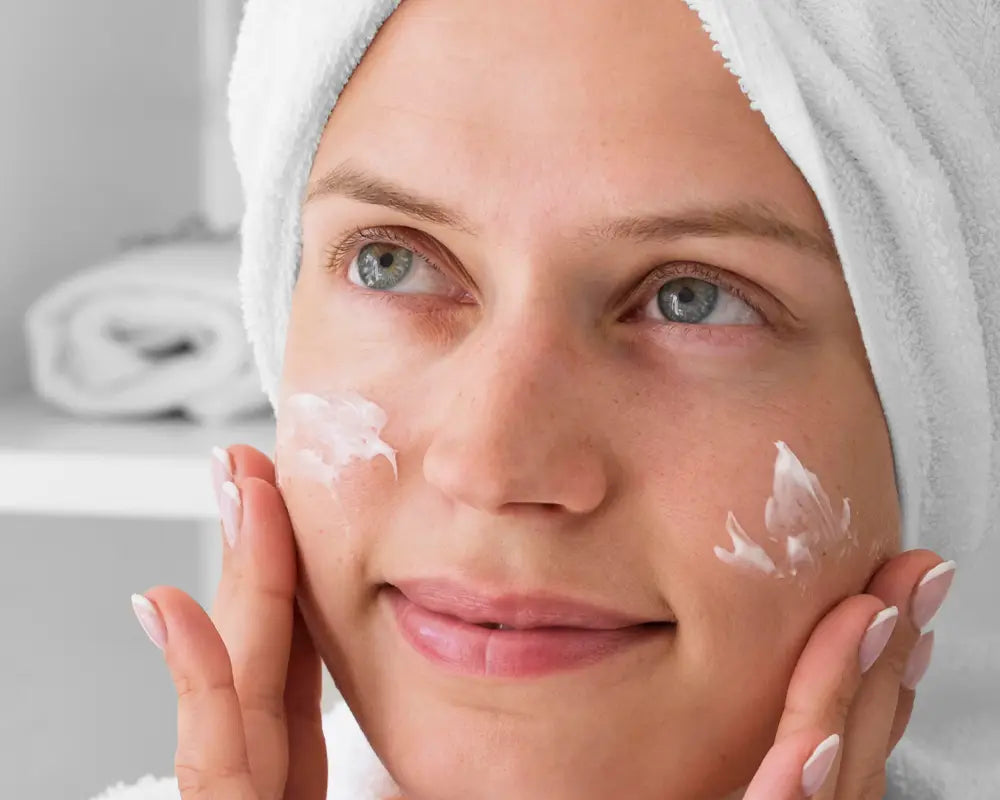
Skin at 25 and skin at 45 have quite different needs. In your twenties, it recovers from a late night or a sunny weekend pretty quickly. By your forties and fifties, the same skin tends to feel drier and takes a little longer to recover.
That's why I'm not a fan of one routine for life. What suits you now may not suit you in ten years.
So first, a quick look at why skin ages. Then I'll walk through how I'd adjust a routine, decade by decade.
What Causes Skin to Age?
There's a twofold process here. One part is internal and affects all of us. Your skin produces less collagen, a protein that helps keep your skin firm. According to a report published in the American Journal of Pathology, older skin shows a significant loss of collagen compared with younger skin. Cellular turnover also slows down somewhat.
The other side is external, and it's the one you can do more to manage. Sun damage over time breaks down collagen and elastin, which is why dermatologists recommend sun protection as a priority. Sleep habits and smoking also contribute to skin aging.
The Core Steps of Any Anti-Aging Routine
No matter your age, I'd build around four steps. Everything else is extra.
- Step 1 (Cleanse): A gentle cleanser helps remove dirt and sunscreen while keeping your skin's natural moisture in place.
- Step 2 (Treat): Pick a serum with an active ingredient that matches your main concern, like fine lines.
- Step 3 (Moisturize): A moisturizer helps your skin hold water and supports its protective barrier.
- Step 4 (Protect): If I could keep only one step, it'd be this one. In a trial published in the Annals of Internal Medicine, adults who used sunscreen daily were 24% less likely to show increased skin aging over four and a half years than occasional users.
What changes with age is the product inside each step.
Anti-Aging Skincare Routine by Age
Here's how the focus shifts. Each decade has its own focus, and the shifts are smaller than you might expect.
In Your 20s: Focus on Prevention
Your skin is probably in great shape right now, so keep things simple.
- Daily sunscreen: Sun exposure adds up over the years, so this is the habit I'd start with first.
- Simple routine: Alongside sunscreen, a cleanser and moisturizer cover the basics.
- Optional extra: A morning vitamin C serum helps provide antioxidant support against environmental stressors. Nice to have, not a must.
In Your 30s: Address Early Fine Lines
This is often when the first fine lines show up, and plenty of people start looking at retinoids.
- Add a retinoid: A study in the Archives of Dermatology reported that retinol, a form of vitamin A, improved fine wrinkles in older adults after 24 weeks. Different age group, I know, but it's still useful to know.
- Start slowly: Using a retinoid two or three nights a week can help your skin adjust. Patience really helps here.
In Your 40s: Support Firmness and Hydration
Skin often feels a bit less firm and a bit drier now, so the routine leans toward support.
- Peptides: These may support collagen production. Results vary between products, so I'd see them as an optional addition.
- Hyaluronic acid and ceramides: Hyaluronic acid helps attract and retain water, while ceramides help support the skin barrier that holds moisture in.
In Your 50s and Beyond: Prioritize Comfort
Hormonal changes, especially after menopause, often leave skin feeling drier. Comfort comes first now.
- Gentler products: Cream cleansers and richer moisturizers help ease dryness.
- Lower-strength retinoid: A milder version may be easier to tolerate and use consistently.
- Daily sunscreen: Still essential, in my opinion. Skin may become more prone to dryness and irritation at this stage, so steady protection and gentle care help support it.
Key Anti-Aging Ingredients at a Glance
You don't need all of these. Adding one at a time helps you see what's actually working for you.
| Ingredient | What It Does | When It Is Commonly Introduced |
|---|---|---|
| Zinc oxide | A mineral sunscreen filter that helps protect the skin from UVA and UVB rays. | 20s onward, in daily sunscreen. |
| Vitamin C | Provides antioxidant support against environmental stressors. | 20s, as an optional addition. |
| Retinoids | Help support cell renewal and collagen production. | Late 20s to 30s, depending on skin concerns. |
| Peptides | May support collagen production and the appearance of firmness. | 40s, as an optional addition. |
| Hyaluronic acid | Helps attract and retain water in the skin. | Any age, particularly when hydration is a concern. |
| Ceramides | Help support the skin's outer protective barrier. | Any age, especially when dryness is a concern. |
How to Choose the Right Products for Your Skin
Price and packaging tell you very little about what's inside. Here's what I'd look at instead.
- Know your skin type: Each skin type responds a little differently to the same formula.
- Read the ingredient list: The active ingredients and their concentrations tell you far more than a phrase like "age-defying" on the front.
- Patch test first: Try a small amount on a discreet area of skin according to the product instructions. A bit tedious, I'll admit, but it can help you spot irritation early.
- Pick a texture you enjoy: If you like how a product feels, that helps you stay consistent with it.
Comparing options from brands such as Olia Skincare? Compare the ingredient lists side by side. It's the simplest way I know to find a match.
Everyday Habits That Support Your Skin
Your routine does a lot, but daily habits help it along.
Sunscreen on cloudy days is a good place to start. Plenty of UV radiation still gets through cloud cover, so I'd wear it on cloudy days too.
Stepping away from smoking helps too. A review in the Journal of Dermatological Science links tobacco smoke to premature skin aging, partly through collagen breakdown. Quitting supports your skin along with the rest of your health.
Then there's sleep. Your skin carries out repair processes overnight, so a steady sleep schedule helps support overall skin health.
And go easy on exfoliation. Depending on your skin type and the exfoliant, once or twice a week may be enough. Avoid over-exfoliating, as it can irritate the skin and weaken its protective barrier.
When to See a Dermatologist
Some changes are worth a professional look rather than a new product. If you notice a new or changing mole, a spot that bleeds or doesn't heal, or redness and itching that persist, a dermatologist is the right person to see.
A dermatologist can also help if your products haven't given you the results you hoped for after several weeks. They can suggest prescription options or in-office treatments suited to your skin.
If you're pregnant or planning pregnancy, check with your healthcare professional before using retinoids. If you have a medical condition or are taking medication, ask your doctor before starting new active ingredients when appropriate.
Conclusion
Your skin's needs will keep shifting from decade to decade. The good news? The core routine stays pretty much the same: cleanse gently, treat what matters to you, moisturize, and protect every single morning.
What changes is what goes inside each step. I'd add new ingredients one at a time and give each one a fair chance. And if you're ever unsure, a dermatologist can help you figure out the next step.
FAQs
At what age should an anti-aging routine begin?
Your twenties are a great time to start. Keep it basic, with daily sunscreen as the main step, alongside a gentle cleanser and moisturizer.
Can retinoids and vitamin C be used together?
Yes. Many people use vitamin C in the morning and a retinoid at night. This approach can make a routine easier to manage, especially if you are concerned about irritation. Introduce each ingredient gradually and adjust according to your skin's response.
How long do anti-aging products take to show results?
Results may take weeks to months, so patience helps. In one study, improvements from retinol were assessed after 24 weeks. Individual results vary depending on the product and your skin.
Are expensive products more effective than affordable ones?
Not necessarily. The active ingredients, formulation, suitability for your skin, and how consistently you use the product matter far more than the price tag.
References
- Varani J, et al. Decreased collagen production in chronologically aged skin: roles of age-dependent alteration in fibroblast function and defective mechanical stimulation. American Journal of Pathology. 2006;168(6):1861–1868. https://pubmed.ncbi.nlm.nih.gov/16723701/
- Hughes MCB, et al. Sunscreen and prevention of skin aging: a randomized trial. Annals of Internal Medicine. 2013;158(11):781–790. https://pubmed.ncbi.nlm.nih.gov/23732711/
- Kafi R, et al. Improvement of naturally aged skin with vitamin A (retinol). Archives of Dermatology. 2007;143(5):606–612. https://pubmed.ncbi.nlm.nih.gov/17515510/
- Morita A. Tobacco smoke causes premature skin aging. Journal of Dermatological Science. 2007;48(3):169–175. https://pubmed.ncbi.nlm.nih.gov/17951030/